Registered Apprenticeship: Building Your Future Through Hands-On Experience
What is Registered Apprenticeship?
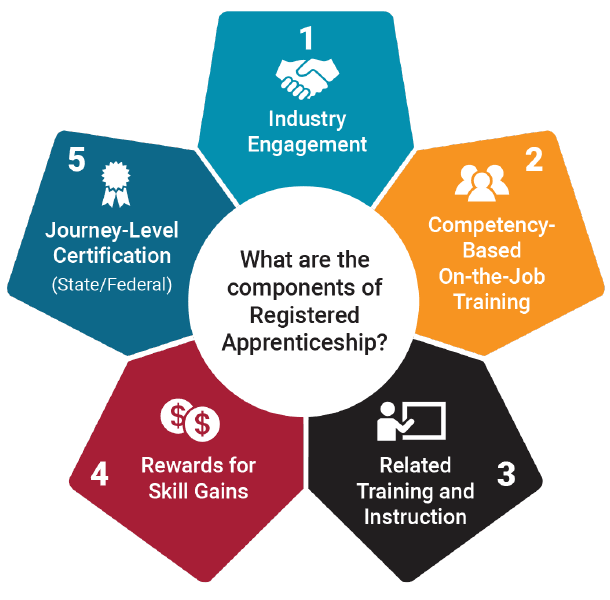
Registered Apprenticeships are a unique and proven pathway to a skilled career. They combine on-the-job training with related classroom instruction, allowing you to earn while you learn and gain valuable experience in a specific trade or occupation. Unlike traditional education or training programs, Registered Apprenticeships provide you with:
Paid Work Experience Earn a competitive wage while you develop your skills under the guidance of experienced professionals.
Structured Training Receive a combination of hands-on training and classroom instruction that meets industry standards.
Industry-Recognized Credentials Upon completion, you’ll earn a nationally recognized credential that validates your skills and expertise.
Career Advancement Apprenticeships often lead to full-time employment with opportunities for growth and career advancement.
Our Role in Registered Apprenticeship
We serve as a bridge, connecting individuals with disabilities and motivated youth to Registered Apprenticeship opportunities in a variety of industries. We work closely with employers to:
Identify workforce needs and create inclusive apprenticeship programs
Provide training and support to ensure the success of apprentices with disabilities
Offer guidance on accessing resources and incentives, such as tax credits and funding opportunities
For Individuals
If you’re looking for a rewarding career with excellent growth potential, a Registered Apprenticeship may be the perfect fit. We can help you:
Explore different apprenticeship opportunities and identify your interests and skills
Navigate the application process and connect with potential employers
Access support services such as accommodations and assistive technology to ensure your success
📄 [Click here to download more information on Becoming an Apprentice] 📄 [Click here to download the Apprenticeship Application]
For Employers
We partner with businesses to develop and implement Registered Apprenticeship programs, providing you with access to a skilled and diverse talent pool.
By hiring apprentices with disabilities, you can:
Meet workforce needs and address skills gaps
Increase employee retention and reduce turnover costs
Foster a more inclusive and diverse workplace
Potentially access financial incentives and tax credits